Guides
Massage therapy compliance checklist: opening a practice
A massage therapy compliance checklist: the four regulators, the filings they require, one state's published fees, and the cash a build-out takes.
What to take away
- Four separate authorities usually govern one roomthe massage board licenses the therapist, the health department inspects the premises, the city issues the occupancy permit, and the state revenue office registers the business.
- Build-out and licensing costs land before the first client, so opening cash has to cover them without a single booking.
- Therapist pay is not the hourly rate alone. Payroll tax, workers compensation and scheduling overhead ride on top of it.
- A written opening budget turns those lines into a number you can check against your savings.
This massage therapy compliance checklist covers practice operations and business setup, not clinical guidance. Licensing, sanitation, scope of practice and employment rules vary by state and county, so confirm each one with your state massage licensing board, your local health department and a qualified adviser.
The four regulators behind one treatment room
Most new owners assume the massage board is the only gatekeeper. It is one of four.
Four Regulators, One Treatment Room
Regulator
- State massage board
- Therapist credentials
- City or county
- Business licence, zoning, conditional use permit
- Health department
- Premises inspection, linens, surfaces, handwashing
- State revenue office
- Business registration, sales tax permit
What it controls
- State massage board
- City or county
- Health department
- State revenue office
The state massage licensing board handles therapist credentials. Your city or county issues the business licence and the zoning or conditional use permit that decides whether a home studio or a retail suite is allowed at that address.
The health department inspects the premises and sets the rules for linens, surfaces and handwashing.
The state revenue office registers the business and issues the sales tax permit.
A therapist and an establishment can sit under different regulators in the same room. Write down which body owns which requirement before you sign a lease, not after.
Sequence the work this way. Check zoning and the board's therapist licence rules before you sign a lease. Get the health department's premises and sanitation rules before build-out starts. Register with the revenue office and confirm the worker classification before you hire.
Timelines vary by board and county. A typical board review runs a few weeks once the application is complete, and some states take longer in peak season.
Health inspections are usually booked after the build-out passes, so allow one to three weeks after you request one. Check your board's posted processing time and your health department's inspection calendar before you set an opening date.
The opening file, item by item
- Therapist license from the state massage board.
- Establishment or operating license, where the state issues one separately.
- Local business license, plus the zoning or conditional use approval for the address.
- Certificate of occupancy from the city or county building office.
- Health department premises inspection.
- Sales tax registration with the state revenue office.
- Business entity registration with the state, and an EIN from the IRS on Form SS-4.
- Workers compensation and professional liability insurance in force before the first client.
Some states publish the whole schedule. The Texas Department of Licensing and Regulation handles massage establishment licensure: you file a completed application with a non-refundable application fee of $200, a license is valid for two years, licensed establishments are inspected once every two years, and applicants with a criminal conviction must include a completed Criminal History Questionnaire (PDF) with their materials.
What opening actually costs
Opening costs are the money spent before the first booked client. They fall into four buckets, and you can price each one for your own market.
Four Opening Cost Buckets
Bucket
- Licensing and permits
- Board application, business licence, occupancy permit, health fee
- Build-out
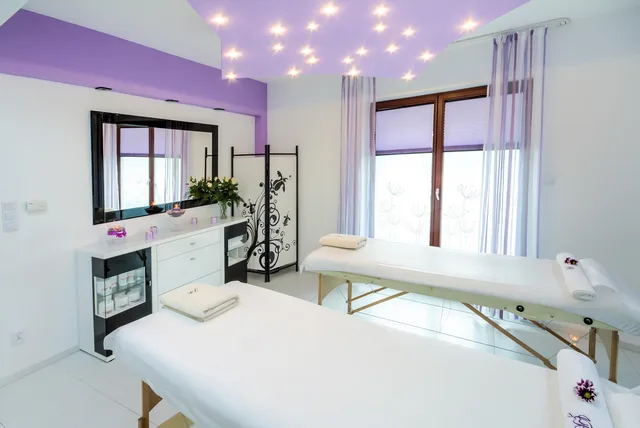
- Treatment room, sink plumbing, lighting, sound separation, waiting area
- Equipment
- Table, linens, bolsters, face cradle covers, laundry, booking software
- Working capital
- Rent, insurance, software, first payroll before revenue
What sits in it
- Licensing and permits
- Fee schedule from each authority
- Build-out
- Two contractor quotes on same scope
- Equipment
- Retail or wholesale quote, new against used
- Working capital
- Monthly fixed costs times ramp months
How to price it
- Licensing and permits
- Build-out
- Equipment
- Working capital
| Bucket | What sits in it | How to price it |
|---|---|---|
| Licensing and permits | Board application, business licence, occupancy permit, health inspection fee | Fee schedule from each authority |
| Build-out | Treatment room, plumbing for a sink, lighting, sound separation, waiting area | Two contractor quotes on the same scope |
| Equipment | Table, linens, bolsters, face cradle covers, laundry capacity, booking software | Retail or wholesale quote, new against used |
| Working capital | Rent, insurance, software, first payroll before revenue covers it | Monthly fixed costs times the months you expect to ramp |
A worked example with typical ranges for a single room: licensing and permits $200 to $1,000; build-out $8,000 to $25,000; equipment $3,000 to $8,000; working capital for a four-month ramp $6,000 to $13,000. The total sits between about $17,000 and $47,000.
Each authority publishes its own fee schedule, and the state board's fee is separate from the city licence and the health inspection fee. Your market will move each line, so collect those schedules and two quotes on the same build-out scope before you fix the total.
Payroll is more than the hourly rate
A therapist paid an hourly rate costs more than that rate. Employer payroll taxes, workers compensation premiums and the hours spent on scheduling and admin all ride on top.
True Cost Per Billable Hour
- Take the therapist hourly rate
- Add employer payroll tax rate
- Add workers compensation rate for classification
- Divide by percentage of paid hour that is hands-on
- Compare result against session charge
Run the arithmetic in your own numbers. Take the hourly rate, add the employer tax rate, add the workers compensation rate for your classification, then divide by the percentage of a paid hour that is actually hands-on.
The result is your true cost per billable hour. Compare that against what you charge for a session, and the margin is either there or it is not.
Classify therapists as employees or contractors from the real working relationship, not the label. Control over schedule, pricing and clients is the test, and the IRS publishes Form SS-8 for a formal worker status determination, while your state unemployment insurance agency applies its own test. Getting it wrong is a tax and employment problem, so ask an employment attorney or a CPA before you hire.
Where the rules live
U.S. Bureau of Labor Statistics: Massage Therapists covers duties, work settings, licensing, training, current pay and self-employment data by state.
The Federation of State Massage Therapy Boards Model Massage Therapy Practice Act is a resource for regulators on licensure, scope, conduct and records. Each state adopts its own version, so read your board's actual rules.
U.S. Department of Health and Human Services: Covered Entities and Business Associates explains that HIPAA applies to covered entities and business associates, not automatically to every business holding health information. Use its decision tool before assuming coverage.
Write the opening budget before the lease
Put the four buckets on one page with a total. If the number exceeds your available cash, the shortfall is the gap you have to close before opening day. Close it by cutting the build-out, leasing used equipment, or delaying the start.
Compare used equipment prices before you commit to the build-out scope.
Once the doors open, the same discipline moves to daily operations. Cleaning, linen handling and complaint escalation need a scheduled owner, and that belongs in your massage therapy daily SOPs.
The jurisdiction map starts with the licences a massage therapy business needs, and the wider frame sits in licences and compliance.
The working capital line is the one that kills openings. Rent and insurance bill in month one whether or not you have clients. An incident carries a deadline the practice does not set, so read the notice terms behind the insurance line items before one happens.
Liability cover belongs in that opening file, not in a drawer. Professional liability and general liability are the two lines boards, landlords and clinic networks most often ask to see before a therapist treats a client, and workers compensation applies once you have employees. Confirm the limits each one wants before you sign the lease.
Common questions
What should this not be used for?
It is not a licensing shortcut or legal advice. Requirements turn on the setting, the client population and the working relationship, so confirm the local rule with your state board, your health department and a qualified adviser.
How do I price a therapist's true cost?
Take the hourly rate, add employer payroll tax and workers compensation, then divide by the share of a paid hour that is hands-on. That figure is your cost per billable hour, and the margin is what you charge minus it.
Does every state publish its opening fees?
Some do. A few boards post application fees, validity periods and inspection schedules on a public page, while others send the schedule only on request. Collect what you can, and treat a schedule you cannot find as an open question in the budget rather than as a zero.