Guides
Massage therapy equipment: an owner's decision framework
Massage therapy equipment decisions come down to piloting one change, naming one owner per asset, and reviewing replacement cost every month.
What to take away
- Buy equipment only after the service menu is fixed. Equipment bought first becomes storage.
- Pilot one change for four weeks against a written expected result and an earliest sign of failure.
- Give every asset a named owner and a review date. An unowned table is a table nobody inspects.
- Track downtime, repeat repairs and utilization per asset monthly. Repair or replace on total cost, not book value.
- Confirm sanitation, scope and opening requirements with your state massage licensing board and local health department.
This article covers practice operations only. It is not medical, legal, tax or insurance advice. Requirements vary by state, county and payer, so confirm current rules with your licensing board, health department, CPA or attorney before acting.
The decision an owner actually makes
A table, a chair, a warmer and a linen system are not a shopping list. They are capacity decisions with a monthly cost attached. Every dollar in equipment is a dollar not in payroll, marketing or reserve.
The mistake is buying before the service menu is settled. A room built for hot stone work carries gear that a 60-minute Swedish room never touches. That gear still takes floor space, insurance value and cleaning time.
So the sequence runs menu first, then capability, then purchase. massage therapy equipment for a first-time owner covers what has to be in the room on day one. This article covers what happens after that.
Pilot before you buy the second one
Write the expected result before the test starts. "Two more 90-minute bookings per week" is testable. "Better client experience" is not.
Then write the earliest sign of failure. If the new table is not being chosen by therapists within two weeks, the fit is wrong, not the schedule.
Run the pilot for four weeks on a limited service group. Compare the same measures before and after: bookings taken, room turnover time, therapist comments, and any downtime.
At the end, decide one of three things. Expand it to every room, revise the specification and test again, or stop. Stopping is a real result and should be recorded as one.
Name an owner for every asset
An asset without an owner is an asset without an inspection. Assign each table, chair, warmer and laundry unit to one person by name, not by role.
That owner keeps the maintenance log, flags damage, and raises replacement before a failure lands on a booked Saturday. They also hold authority to pull an asset out of service.
Review table fit, inspection exceptions and downtime on a fixed schedule. Monthly works while the process is new. Quarterly is enough once the log is reliable.
The service menu decides how much positioning gear a room needs, and package design sets which bundles justify the extra kit.
Specify tables on fit, not on weight
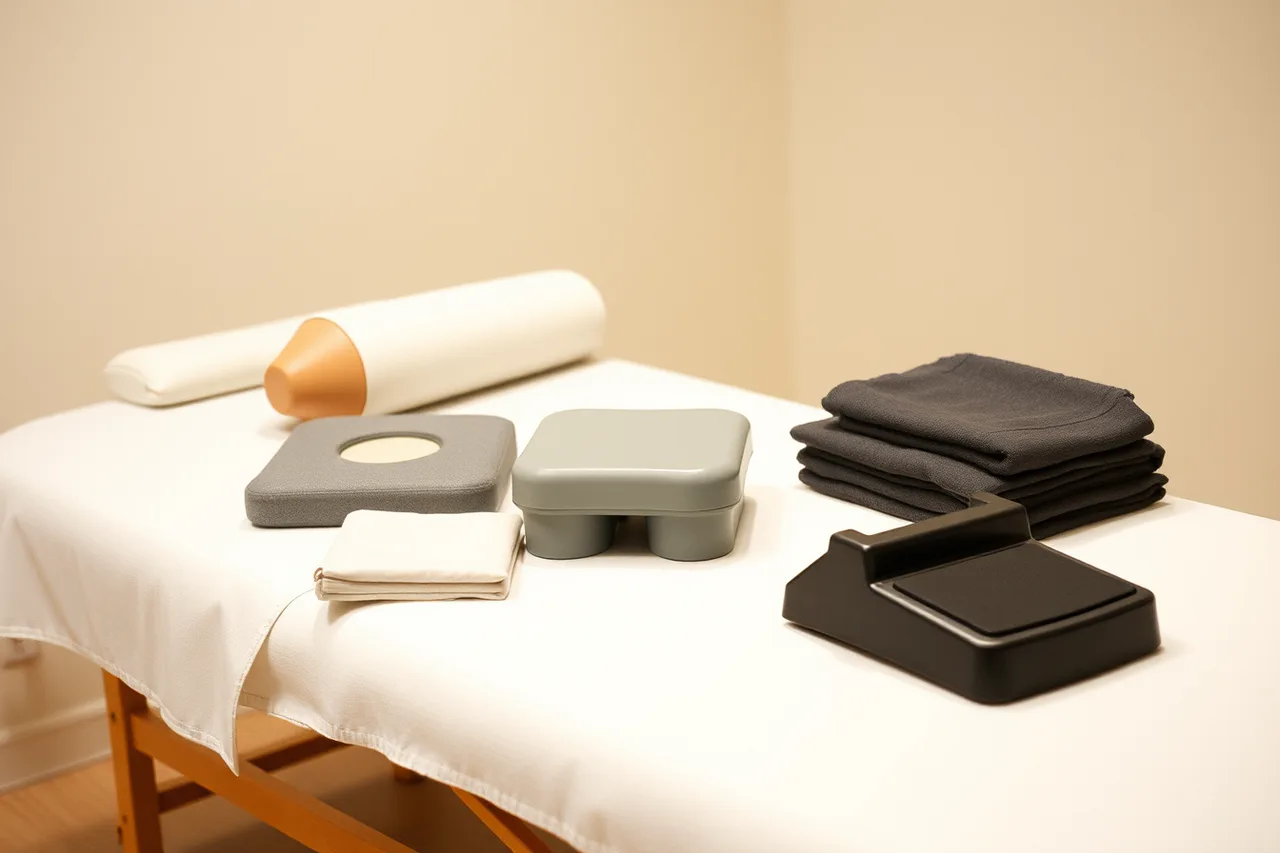
Working weight is the least useful number on the spec sheet for most practices. Height range, width, adjustment speed and face cradle geometry decide whether a therapist can work a full day without strain.
Check stability under a transfer, not on the showroom floor. Check upholstery care against the cleaner your jurisdiction allows. Check that replacement parts and warranty service exist in your metro.
Choosing on price or shipping weight alone is the practical risk. A table that arrives cheap and cannot be repaired locally costs more by month eight.
Build the linen system around peak day
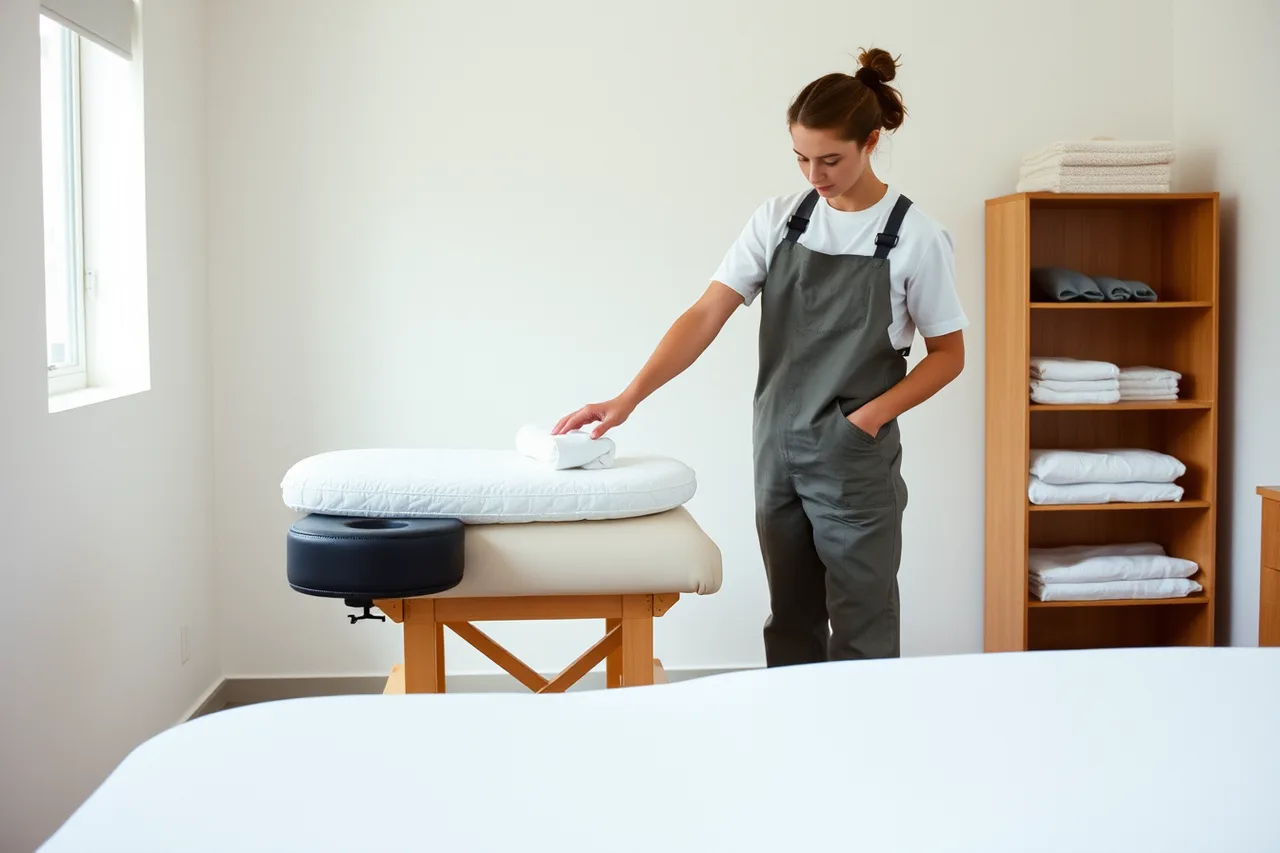
Count par levels from your busiest day, not your average one. Sheets, towels, covers, hampers and clean storage all scale from that number.
One set per appointment with no buffer runs the shelf empty by the second late client. Add a contamination buffer and a turnaround delay to the count.
Separate clean from soiled in the room, not just in the back. A single hamper in a treatment room is where cross-contamination starts, and the fix is layout, not discipline.
Review linen shortages, loss and damage monthly. If the number keeps climbing, the par level is wrong or the laundry vendor is.
Control products and mobile kits
Keep every product in its original labeled container. Decanting into an unlabeled bottle is the most common finding in a practice audit and the easiest to fix.
Record the lot number and expiry where the manufacturer provides one. Note approved substitutions so a therapist does not improvise mid-shift.
Mobile work needs its own kit. A transportable table or chair, vehicle storage, clean and soiled separation, lighting and payment handling all travel with the therapist.
Treating the office kit as ready for every off-site room is the practical risk. Screen the location before you quote it. Claims and sensitivity handling sit close to scope of practice, which massage therapy licensing and compliance works through in detail.
Review replacement on total cost
Repair or replace is an arithmetic question, not a sentimental one. Add the repair quote, the downtime cost and the expected remaining life. Compare that against purchase price divided by expected service life.
If the repair costs more per remaining month than the replacement costs per new month, replace. Book value is irrelevant to that comparison.
Track downtime, repeat repairs and utilization per asset every month. A table used four times a week and repaired twice a year is telling you something a table used once a week is not.
The purchase itself has its own math. new or used massage therapy equipment compares the two routes on cost and service history.
Where the authorities draw lines
U.S. Bureau of Labor Statistics: Massage Therapists describes duties, work settings, licensing, training, pay and the physical demands of the work. Use it to sanity-check session length and scheduling assumptions, not to set your prices.
Centers for Disease Control and Prevention: Cleaning and Disinfecting distinguishes cleaning from sanitizing and disinfecting, and points to the product label as the authority. Your state board and local health department set what applies in your room.
Occupational Safety and Health Administration: Safety Management recommends a proactive program that finds and fixes hazards before an injury or inspection does. That is the frame for maintenance logs and equipment retirement.
Repair-or-replace math for two tables
A practice runs six tables. Two are eight years old and have each been repaired twice this year. Assume the repair quote is R, the downtime per repair is D hours at a room rate of H, and a new table costs P with an expected life of L months.
The old table's remaining cost per month is (R + D x H) divided by the months you expect it to last. The new table's cost per month is P divided by L. Substitute your own figures for R, D, H, P and L.
If the first number is higher, replace. If it is lower, repair and revisit at the next monthly review. The point is to make the comparison explicit rather than defaulting to whichever choice protects the schedule this week.
Common questions
Who should own equipment decisions?
The owner sponsors the decision, but daily ownership sits with whoever controls the room and the log. That is usually the lead therapist or practice manager. Regulated questions about sanitation or scope go to the state board, not to the team.
How often should the practice review assets?
Monthly while the process is new, then quarterly once the log is reliable. Reopen the decision whenever the service menu, staffing, vendors, lease or local rules change.
Which numbers matter most?
Downtime hours, repeat repairs per asset, utilization per room, and linen par against peak day. Keep the set small enough that someone actually produces it each month.
What should a new owner avoid?
Avoid copying another practice's equipment list, price or staffing ratio without knowing its client mix. Avoid buying before the menu is fixed. And avoid treating a general article as a substitute for your board, your health department or your CPA.