Guides
Boston integrative health clinics and where massage therapy fits
Massage therapy practice operations in Boston: how hospitals, universities and integrative clinics refer patients, and how to earn those referrals.
What to take away
- Massage therapy practice operations in Boston grow fastest through clinical referral relationships, not broad local search traffic.
- Boston hospitals and universities send patients through rehabilitation, oncology support, sports medicine and employee wellness channels.
- Integrative medicine clinics screen for licensed therapists who carry liability coverage, document visits and communicate in clinical language.
- Credentialing at Boston institutions usually means a current Massachusetts license, malpractice insurance and a completed vendor packet.
- Track referral sources, referral to booking rate and repeat referral rate every month to see which relationships pay.
How Boston hospitals and universities refer massage patients
Boston is an academic medical hub. Teaching hospitals run rehabilitation, oncology support and sports medicine departments that keep lists of outside massage therapists. They rarely advertise those lists. A discharge planner or nurse navigator adds a therapist when a patient asks for one and the therapist has already been vetted.
Named Boston examples include Massachusetts General Hospital, Brigham and Women's Hospital, Beth Israel Deaconess Medical Center, Boston Children's Hospital and Spaulding Rehabilitation Hospital. Universities include Harvard University, Boston University and Northeastern University.
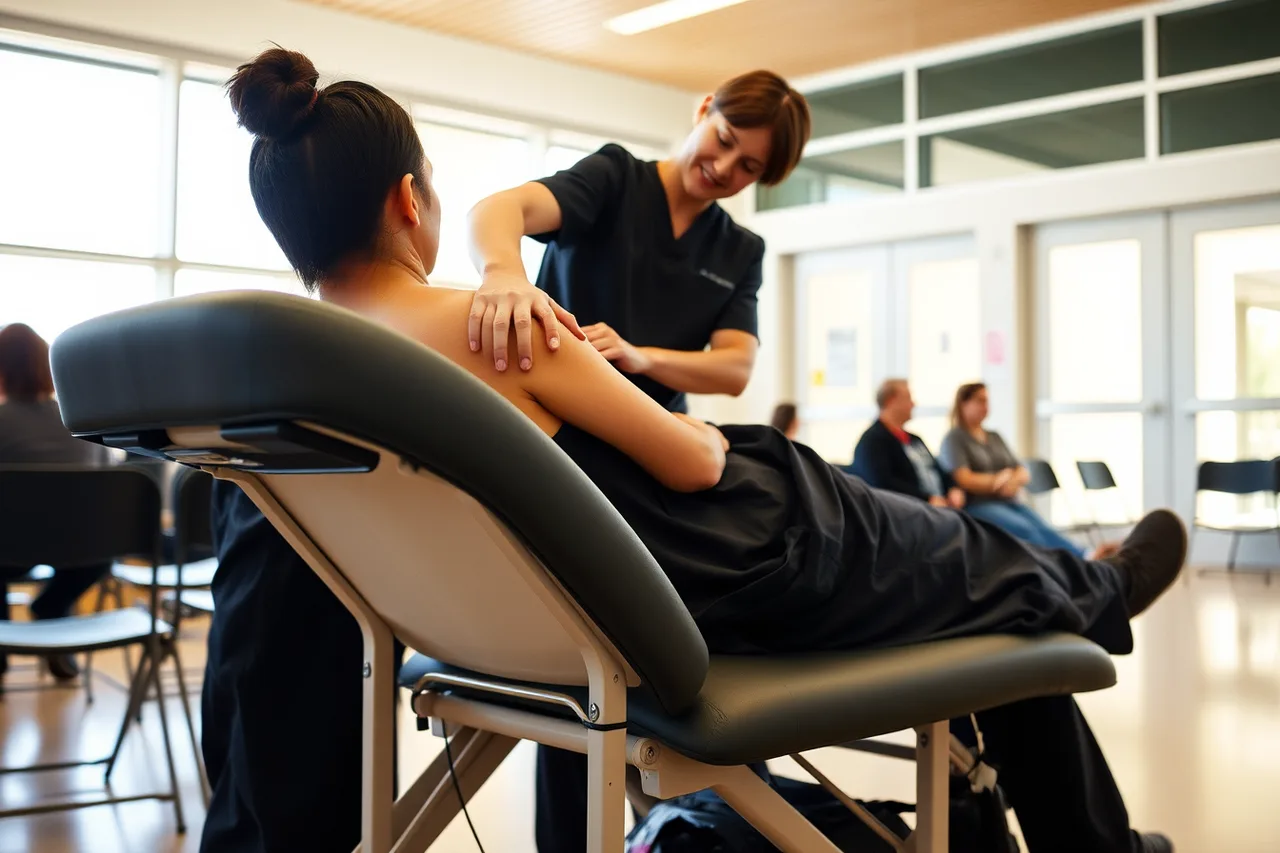
The common entry points are orthopedic recovery, cancer care support, Parkinson's and stroke rehabilitation, and athletic programs at universities. University recreation departments also book chair massage for staff and student events, which is a lower-commitment way to start a relationship.
Referrals move through people, not portals. A physical therapist who trusts your intake notes will mention your name at a care conference. That is why the first step is identifying the coordinator, not the department head.
Hospitals also apply safe patient handling and ergonomics standards to anyone working on their campus. Reviewing the ergonomics principles in the OSHA hospitals eTool helps you describe transfers, table height and body mechanics in language a safety officer recognizes. See eTool : Hospitals | Occupational Safety and Health Administration.
Massage therapist employment in the United States is tracked by occupation, and the figures give you a sense of how crowded your local market is. The Overview of BLS Statistics by Occupation : U.S. Bureau of Labor Statistics is the place to check before you pitch a hospital on a new contract.
What integrative medicine clinics look for in a massage partner
Integrative medicine clinics in Boston combine primary care, acupuncture, nutrition and behavioral health under one roof. They refer out for massage when a patient needs hands-on work they do not provide in house.
Boston integrative health programs include the Osher Center for Integrative Medicine at Brigham and Women's Hospital, the Benson-Henry Institute for Mind Body Medicine at Massachusetts General Hospital and the Zakim Center for Integrative Therapies at Dana-Farber Cancer Institute. Hospital-based programs typically keep some therapies in house and refer out for others.
What they screen for is predictable. A current Massachusetts license, professional liability insurance, a clean intake process and willingness to accept their referral form. They also want a therapist who will not diagnose or adjust a treatment plan without telling them.
Clinics care about scheduling reliability more than most therapists expect. If a referred patient cannot get an appointment within two weeks, the clinic stops sending people. Hold a few slots each week for clinical referrals.
Communication style matters. A one-page note back to the referring clinician, written in plain clinical language, keeps you on the list. The profitable massage therapy services are mostly administrative, not clinical.
Hygiene standards are part of the screen. Clinic managers look for surface cleaning schedules, fresh linens per client and hand hygiene between sessions. The CDC's Infection Control for Healthcare Providers | Infection Control | CDC is the reference they expect you to follow.
Documentation and communication that earn repeat referrals
Referral documentation is where most massage practices lose momentum. A referring clinician needs three things: what you found, what you did, and what changed. Keep it to one page.
A workable note includes the referral source, visit date, areas treated, techniques used, the patient's reported response and any plan for follow up. Avoid diagnostic language. Describe observations instead.
Send the note within two business days. Clinics batch their chart reviews, and a late note arrives after the care team has already moved on.
Use a simple referral log. It should capture who sent the patient, the date, whether the patient booked, whether they returned and whether the referring clinician acknowledged the note.
Documentation and communication
- Log the referral the day it arrives.
- Send the intake confirmation to the patient within one business day.
- Book the first visit inside two weeks.
- Send the clinical note within two business days of the visit.
- Follow up with the referring clinician after the third visit.
That sequence is basic workflow and operations work, but it is what separates therapists who get steady clinical referrals from those who get one and never hear back.
Credentialing and insurance expectations in Boston
Credentialing expectations vary by institution. A community health center may only ask for a license and a W-9. A teaching hospital may require a vendor packet, proof of liability insurance, a background check and a signed business associate agreement.
Massachusetts does not license massage therapy at the state level through a single board the way some states do. Boston employers and clinics therefore verify credentials directly, which means your paperwork has to be ready before you ask.
Keep a credential file with your license or municipal permit, liability insurance certificate, CPR certification if you have it, and a one-page practice summary. Update it every year.
Insurance billing is a separate question. Most Boston integrative clinics do not bill massage to health insurance. They either charge patients directly or fold massage into a cash package. Ask how the clinic handles payment before you assume anything.
Benchmarking your rates against the wider wellness and personal care sector helps when a clinic asks for a contracted rate. The Overview of BLS Statistics by Industry : U.S. Bureau of Labor Statistics covers those sectors.
Outreach that beats generic local SEO
Generic local SEO gets you found by people who already decided to book a massage. Clinical referrals reach patients who were told to get one. The second group is smaller and far more loyal.
Start with a short list. Pick five clinics or departments within a reasonable drive of your studio. Research the coordinator or nurse navigator by name.
Send a one-page introduction. State your license, your clinical focus, your availability and how you handle documentation. Offer to take one referred patient at no obligation.
Follow up by phone after a week. Email alone rarely produces a first referral.
A Local SEO checklist still matters for your website, because clinicians will look you up before they call. Make sure your address, hours and license information are current.
For the broader growth picture, Marketing a massage therapy business covers channels beyond referrals. Clinical outreach works best alongside it, not instead of it.
Measuring referral performance month to month
You cannot manage referral relationships you do not measure. Set up a simple monthly review with four numbers.
- Referral sources active this month
- New patients who came from a referral
- Referred patients who booked a first visit
- Referred patients who returned for a second visit
- Clinical notes sent within two business days
- Referring clinicians who sent more than one patient
Compare the numbers month to month. A source that sends patients who never return is not a good source, no matter how many names it sends.
Referral to booking rate tells you whether your front desk response is fast enough. Repeat referral rate tells you whether your documentation is working. Both belong in the same review.
Set a target for each number and review it on the same day each month. This is quality assurance for owners applied to the referral pipeline rather than to treatment rooms.
When a source goes quiet for two months, call. Relationships fade without contact, and a short check-in call usually restarts them.