Guides
Massage Therapy Practice Operations: Schedule C Examples
Massage therapy practice operations, with Schedule C examples for supplies, home-office use, mileage, license costs, insurance, and personal expenses.
What to take away
- Every deduction must be ordinary and necessary for massage work, and you must prove you paid it.
- Line 22 takes oils, lotions, linens and consumables. Long-life assets such as an electric table are depreciated instead.
- Renewals, required continuing education and dues go on Line 27a. A home massage room goes on Line 30 under an exclusive-use test.
- Client-home mileage belongs on Line 9, while the drive to a rented studio is commuting. Personal care items, mixed-use clothing and solo meals are not deductible.
The ordinary and necessary test before any line
IRS Schedule C (Form 1040) is the profit or loss form a sole proprietor files. Income goes at the top, expenses run by line, and net profit carries to Schedule SE for self-employment tax.
Ordinary means common in the field: tables, oils, sheets, insurance, renewal fees. Necessary means helpful and appropriate, not extravagant. The cost must serve the business and sit in the year you claim it.
One form covers a single room or a three-room clinic. A written business plan helps you separate start-up costs from ongoing ones before the first return.
Line 22: supplies, lotions and long-life equipment
Line 22 covers supplies consumed in the year: oils, lotions, creams, face rest covers, gloves, cleaning products.
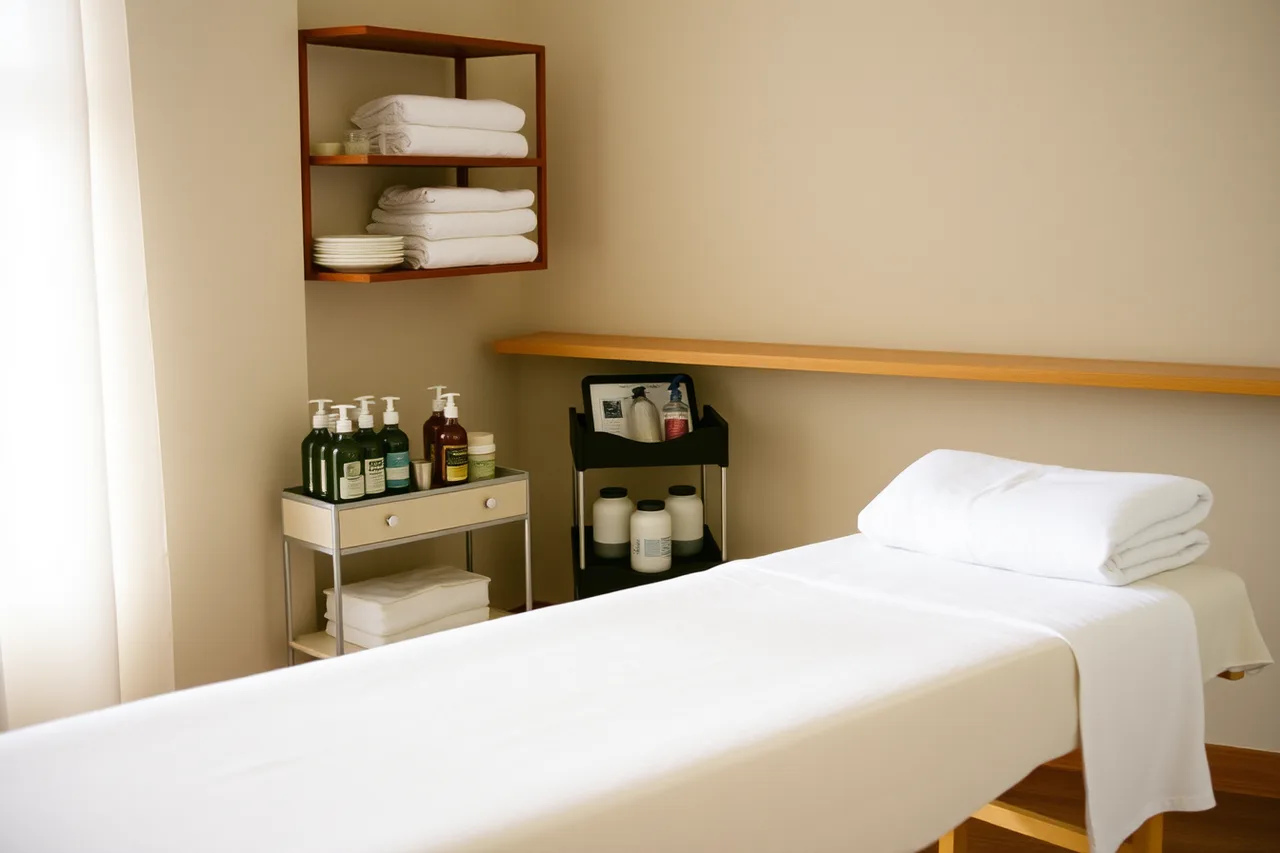
Longer-life items are generally recovered through depreciation rather than deducted as supplies, as IRS Publication 535 explains. The portable table below is not automatically a Line 22 supply: its listed cost may qualify for the de minimis safe harbor described in the FAQ if you meet the requirements; otherwise, apply the depreciation rules.
| Purchase | Typical cost | Where it goes |
|---|---|---|
| Portable table | $400 to $700 | Line 22 supplies |
| Electric table | $2,500 to $4,000 | Depreciated over years |
| Oil, one gallon | $40 to $80 | Line 22, business share |
| Towels also used at home | $60 to $100 | Not deductible |
Mixed stock is the trap. When one bottle of oil serves the studio and the household, only the business share is deductible. The licensing and compliance rules for your state cover the paperwork behind such receipts.
Line 27a: renewals, required CE and association dues
Line 27a is for other business expenses not reported on another line. It is not a catch-all for state and local license fees or business insurance premiums.
CE qualifies when it maintains or improves skills in the business you already run. Deep tissue, prenatal and oncology courses count, while a course preparing you for another career does not.
State and local license fees are deductible and generally reported on Line 23, Taxes and licenses. California's CAMTC certificate is a statewide credential that many cities require before issuing a permit, so its renewal is a business cost. Keep the renewal receipt, because a board statement alone may not show what you paid.
Dues to AMTA or ABMP count when they support the practice, as does liability cover from a massage-specific carrier. Software that runs bookings and payments is a business tool too.
Your first license is a start-up cost, not a current deduction. Fees and renewal cycles differ by state, which is one reason state licensing boards deserve a look before you file.
Line 30: a home massage room and the exclusive-use test
Line 30 draws scrutiny. The space must be used exclusively and regularly for the business. A spare room that holds a table and hosts the odd client does not qualify.
Exclusive use forbids personal use of any kind. Homework at the desk, storage boxes and a guest bed all fail the test. The Schedule C instructions state that requirement directly.
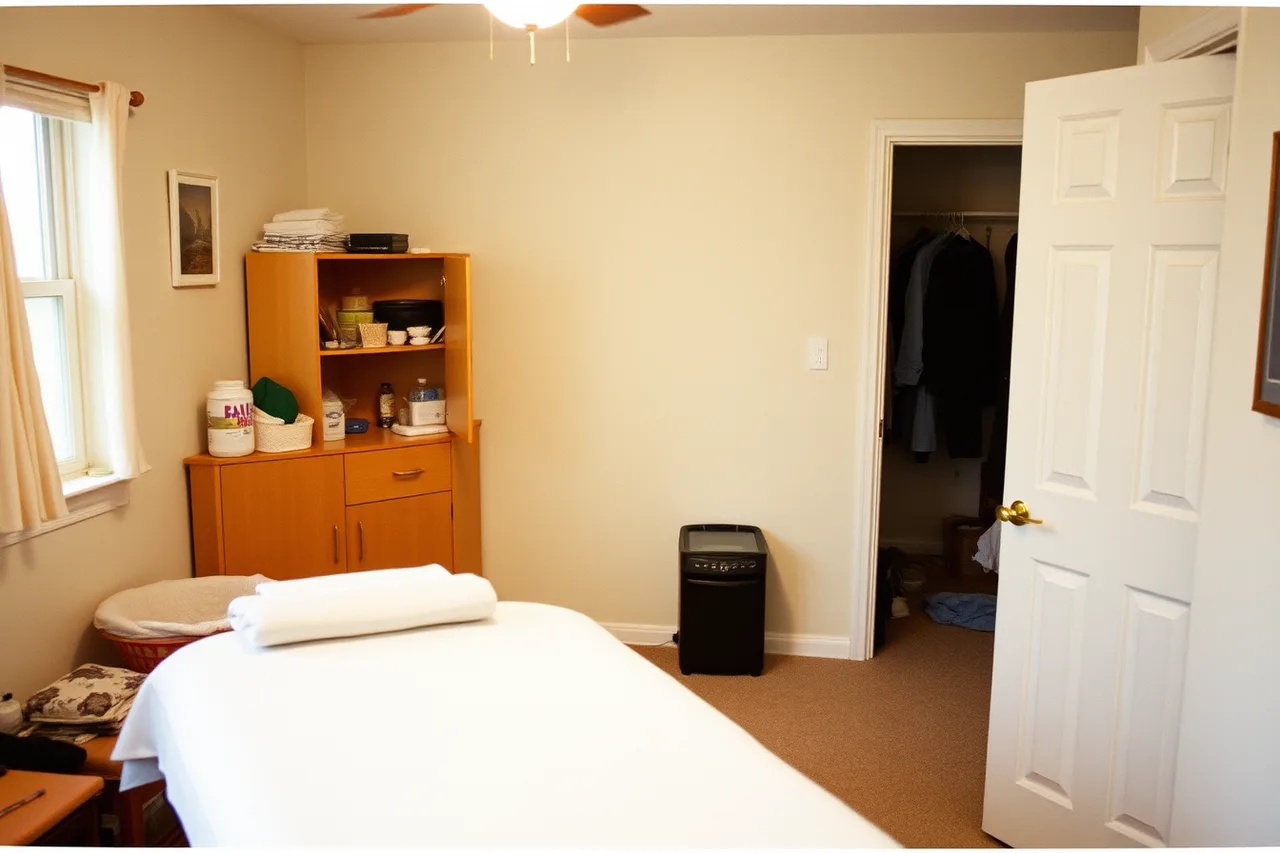
The regular method multiplies actual costs, including rent, utilities, insurance and repairs, by the business percentage. The simplified method is another option; this example uses the regular method. Check the IRS instructions for the calculation that applies to the tax year.
Example: 120 square feet in Denver
A therapist uses a 120 square foot room in a 1,500 square foot home, so business use is 8 percent. Rent of $24,000, utilities of $2,400 and renters insurance of $300 total $26,700, and 8 percent is $2,136 before limits.
The deduction is capped at gross income from the practice, and unused amounts may carry forward.
Line 9: client-home mileage and the studio commute
Line 9 covers car and truck expenses, often the largest deduction for a mobile therapist. You can choose the standard mileage method or actual vehicle costs under the rules for the tax year; verify that year's mileage rate before calculating.
Deductible trips run from your home office to a client's home, from one client to the next, and from the studio to a client site.
Home to a rented studio is commuting and is not deductible.
A log needs date, destination, business purpose and miles. Parking and tolls are deductible on top of the standard rate, and traffic tickets never are. Weigh vehicle costs against rent and supplies using your own profit margins and break-even figures.
What is not deductible, and the records that hold up
Personal care items fail first. Shampoo, deodorant and gym clothes are not deductible, even if you sweat through a shift. Only uniforms that are required and unsuitable for everyday wear qualify.
Meals are limited. Half of a business meal may be deductible in some situations, but a solo lunch between clients is personal.
Mixed-use items need an allocation. A phone or home internet bill shared with family needs a reasonable business share. IRS guidance on deductible business expenses is blunt that personal and family costs do not qualify.
- Receipts for every Line 22 and Line 27a purchase
- A current mileage log with business purpose noted
- Room measurements and household costs for the home office
- A separate business bank account and card
- Reported income that matches 1099-K and 1099-NEC forms
Keep records three years after filing, longer if you depreciate equipment.